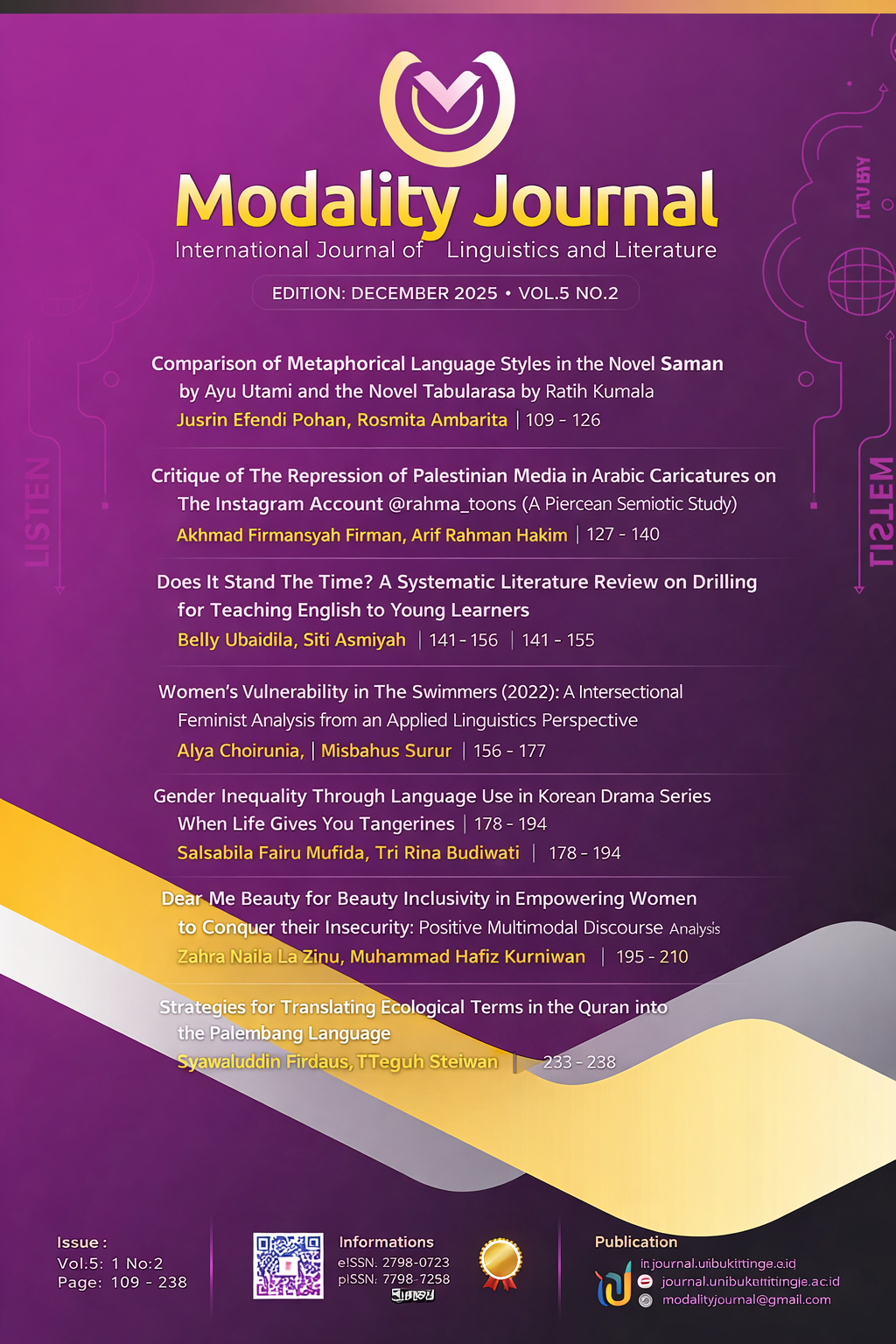
Gender Inequality Through Language Use in Korean Drama Series When Life Gives You Tangerines
DOI:
https://doi.org/10.30983/modalityjournal.v5i2.10413Keywords:
Gender Inequality, Korean Drama, Sosiolinguistic StudyAbstract
References
Journal
Akmal, S., Husna, H., Maulida, T. A., & Farkhan, M. (2022). A Qualitative Inquiry of Politeness Approaches through Gender Category: Evidences from University Students in Aceh. Buletin Al-Turas Vol, 28(2), 251–266.
Alviyanti, I. F. (n.d.). Analysis of Gender Equality in The Film Barbie The Movie. 141–155.
Artini, N. N., Padmadewi, N. N., Suwastini, N. K. A., Rachman, D., & Saputra, I. N. P. H. (2024). Gender Representation in The Illustration of Indonesian 8th Grade EFL Textbook. Jurnal Pendidikan Bahasa Inggris Undiksha, 12(3), 264–274.
Creswell, J. W., & Creswell, J. D. (2017). Research design: Qualitative, quantitative, and mixed methods approaches. Sage publications.
Fadhillah, S. K., Kardiati, D., & Fajarini, S. D. (2025). Representasi budaya patriarki dalam drama korea “ when life gives you tangerines.” Jurnal Sarjana Ilmu Komunikasi (J-SIKOM), 6(1), 1–14.
Furidha, B. W. (2023). Comprehension of the descriptive qualitative research method: A critical assessment of the literature. Acitya Wisesa: Journal Of Multidisciplinary Research, 1–8.
Hikmah, E. F. (2025). Bahasa Sebagai Identitas Gender: Studi Kasus Penggunaan Bahasa Di Media Sosial X. SeBaSa, 8(1), 210–223.
Holmes, J. (2013). An Introduction To Sociolinguistics (Fourth Edi). Pearson Education Limited.
Keraf, D. G. (2009). Diksi dan Gaya Bahasa. PT Gramedia Pustaka Utama.
Keraf, G. (2007). Diksi dan Gaya Bahasa. Gramedia Pustaka Utama.
Larasati, V. O., & Simatupang, E. C. M. (2021). Language Styles in the Movie Luca ( 2021 ): Sociolinguistics Study. 13721–13727.
Lorber, J. (2001). Gender Inequality Feminist Theories and Politics (2nd Ed). Roxbury Publishing Company.
Mehta, A. (2024). Media Representations of Gender and Its Influence on Cultural Norms. Shodh Sagar Journal of Language, Arts, Culture and Film, 1(1), 7–12.
Putri, A. A. (2024). Language Variation in College Students: Sociolinguistics Perspective. Pragmatica: Journal Of Linguistics And Literature Учредители: CV Tirta Pustaka Press, 2(2), 72–76.
Rizki, D., Kurniawati, K., Hanif, H., & Kiram, M. Z. (2023). Gender And The Use Of Local Language In Urban Community. Jurnal Ilmu Sosial Dan Ilmu Politik Malikussaleh (JSPM), 4(1), 36–48.
Saadiyah, E. N., Wahyudi, A. H., & Wahyudi, M. F. (2019). An analysis of language varieties in karang taruna prenduan sumenep. ELite Journal: International Journal of Education, Language, and Literature, 1(2).
Salsabila, I. N., Umam, A. F., Nurjanah, A., Wahyuningsih, O., & Lestari, A. A. D. (2024). The role of gender in language and communication: A linguistic perspective. Eduvest-Journal of Universal Studies, 4(1), 260–269.
Santoniccolo, F., Trombetta, T., Paradiso, M. N., & Rollè, L. (2023). Gender and media representations: A review of the literature on gender stereotypes, objectification and sexualization. International Journal of Environmental Research and Public Health, 20(10), 5770.
Sevia, Melati, R. Z., & Handayani, S. (2024). Analysis on the Role of Language as A Communication Tool in Building Gender Equality: Sociolinguistics Study in The Mulan Movie. English Literature and Linguistics Journal of Universitas Kebangsaan Republik Indonesia, 2(1), 41–49.
Shafira, L. J. (2022). A study about language used toward gender differences between females and males in social context. IDEAS: Journal on English Language Teaching and Learning, Linguistics and Literature, 10(1), 753–764.
Sysyilia Tanhati. (2025). Haenyeo, Kisah Wanita Penyelam Bebas nan Tangguh dari Pulau Jeju. National Geographic Indonesia.
Trudgill, P. (2000). Sociolinguistics (Fourth Edi). Penguin Books.
Tussa’diah, H., Siregar, W., & Batubara, M. H. (2022). Language Model of Male and Female Students (Sociolinguistic Study). Journal of Linguistics, Literature, and Language Teaching (JLLLT), 2(1), 40–45.
Book
Akmal, S., Husna, H., Maulida, T. A., & Farkhan, M. (2022). A Qualitative Inquiry of Politeness Approaches through Gender Category: Evidences from University Students in Aceh. Buletin Al-Turas Vol, 28(2), 251–266.
Alviyanti, I. F. (n.d.). Analysis of Gender Equality in The Film Barbie The Movie. 141–155.
Artini, N. N., Padmadewi, N. N., Suwastini, N. K. A., Rachman, D., & Saputra, I. N. P. H. (2024). Gender Representation in The Illustration of Indonesian 8th Grade EFL Textbook. Jurnal Pendidikan Bahasa Inggris Undiksha, 12(3), 264–274.
Creswell, J. W., & Creswell, J. D. (2017). Research design: Qualitative, quantitative, and mixed methods approaches. Sage publications.
Fadhillah, S. K., Kardiati, D., & Fajarini, S. D. (2025). Representasi budaya patriarki dalam drama korea “ when life gives you tangerines.” Jurnal Sarjana Ilmu Komunikasi (J-SIKOM), 6(1), 1–14.
Furidha, B. W. (2023). Comprehension of the descriptive qualitative research method: A critical assessment of the literature. Acitya Wisesa: Journal Of Multidisciplinary Research, 1–8.
Hikmah, E. F. (2025). Bahasa Sebagai Identitas Gender: Studi Kasus Penggunaan Bahasa Di Media Sosial X. SeBaSa, 8(1), 210–223.
Holmes, J. (2013). An Introduction To Sociolinguistics (Fourth Edi). Pearson Education Limited.
Keraf, D. G. (2009). Diksi dan Gaya Bahasa. PT Gramedia Pustaka Utama.
Keraf, G. (2007). Diksi dan Gaya Bahasa. Gramedia Pustaka Utama.
Larasati, V. O., & Simatupang, E. C. M. (2021). Language Styles in the Movie Luca ( 2021 ): Sociolinguistics Study. 13721–13727.
Lorber, J. (2001). Gender Inequality Feminist Theories and Politics (2nd Ed). Roxbury Publishing Company.
Mehta, A. (2024). Media Representations of Gender and Its Influence on Cultural Norms. Shodh Sagar Journal of Language, Arts, Culture and Film, 1(1), 7–12.
Putri, A. A. (2024). Language Variation in College Students: Sociolinguistics Perspective. Pragmatica: Journal Of Linguistics And Literature Учредители: CV Tirta Pustaka Press, 2(2), 72–76.
Rizki, D., Kurniawati, K., Hanif, H., & Kiram, M. Z. (2023). Gender And The Use Of Local Language In Urban Community. Jurnal Ilmu Sosial Dan Ilmu Politik Malikussaleh (JSPM), 4(1), 36–48.
Saadiyah, E. N., Wahyudi, A. H., & Wahyudi, M. F. (2019). An analysis of language varieties in karang taruna prenduan sumenep. ELite Journal: International Journal of Education, Language, and Literature, 1(2).
Salsabila, I. N., Umam, A. F., Nurjanah, A., Wahyuningsih, O., & Lestari, A. A. D. (2024). The role of gender in language and communication: A linguistic perspective. Eduvest-Journal of Universal Studies, 4(1), 260–269.
Santoniccolo, F., Trombetta, T., Paradiso, M. N., & Rollè, L. (2023). Gender and media representations: A review of the literature on gender stereotypes, objectification and sexualization. International Journal of Environmental Research and Public Health, 20(10), 5770.
Sevia, Melati, R. Z., & Handayani, S. (2024). Analysis on the Role of Language as A Communication Tool in Building Gender Equality: Sociolinguistics Study in The Mulan Movie. English Literature and Linguistics Journal of Universitas Kebangsaan Republik Indonesia, 2(1), 41–49.
Shafira, L. J. (2022). A study about language used toward gender differences between females and males in social context. IDEAS: Journal on English Language Teaching and Learning, Linguistics and Literature, 10(1), 753–764.
Sysyilia Tanhati. (2025). Haenyeo, Kisah Wanita Penyelam Bebas nan Tangguh dari Pulau Jeju. National Geographic Indonesia.
Trudgill, P. (2000). Sociolinguistics (Fourth Edi). Penguin Books.
Tussa’diah, H., Siregar, W., & Batubara, M. H. (2022). Language Model of Male and Female Students (Sociolinguistic Study). Journal of Linguistics, Literature, and Language Teaching (JLLLT), 2(1), 40–45.
Downloads
Published
How to Cite
Issue
Section
Citation Check
License
Copyright (c) 2025 Salsabila Fairu Mufida, Tri Rina Budiwati

This work is licensed under a Creative Commons Attribution-ShareAlike 4.0 International License.
Authors who publish with this journal agree to the following terms:
- Authors retain copyright and grant the journal right of first publication with the work simultaneously licensed under a Creative Commons Attribution License that allows others to share the work with an acknowledgment of the work's authorship and initial publication in this journal.
- Authors are able to enter into separate, additional contractual arrangements for the non-exclusive distribution of the journal's published version of the work (e.g., post it to an institutional repository or publish it in a book), with an acknowledgment of its initial publication in this journal.
- Authors are permitted and encouraged to post their work online (e.g., in institutional repositories or on their website) prior to and during the submission process, as it can lead to productive exchanges, as well as earlier and greater citation of published work (See The Effect of Open Access).